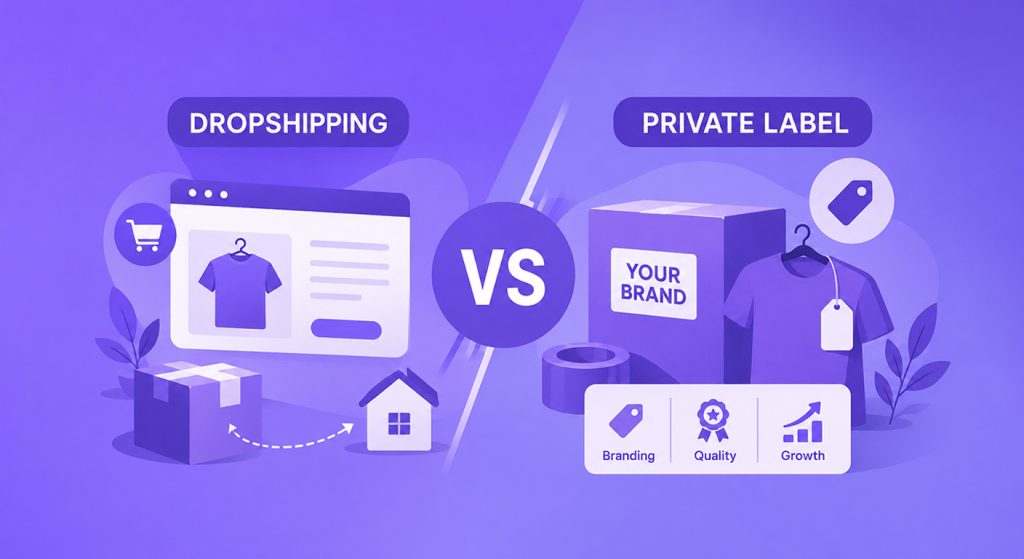
Choosing the right business model is one of the most important decisions for ecommerce entrepreneurs. When comparing dropshipping vs private label, sellers need to understand the differences in product control, branding opportunities, investment requirements, and long-term growth potential. Dropshipping allows businesses to test products quickly with lower upfront costs, while private label gives brands more control over product development and customer experience.
For many growing ecommerce brands, the question is not simply about choosing between dropshipping and private label. It is about finding the right strategy at each stage of business growth. With reliable suppliers, professional private label sourcing, and customized solutions such as custom packaging, sellers can build a stronger brand while improving customer loyalty and profitability.
Dropshipping vs Private Label: Understanding the Two Ecommerce Models
Before deciding which model fits your business, it is important to understand how dropshipping and private label work.
What Is Dropshipping?
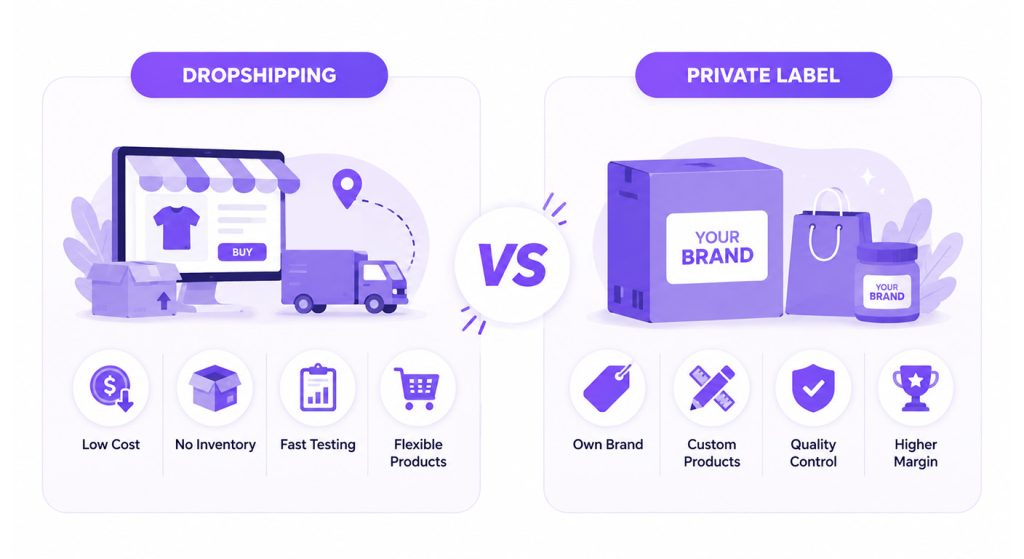
Dropshipping is an ecommerce model where sellers promote products online without keeping inventory. When a customer places an order, the supplier handles product preparation and shipping directly to the customer.
This model is popular among beginners because it reduces the need for large investments. Sellers can test different product ideas, explore new markets, and adjust their product selection quickly.
Key benefits of dropshipping include:
- Lower startup costs
- No need to manage inventory
- Easier product testing
- Flexible product selection
- Faster market entry
However, traditional dropshipping also has some challenges. Since many sellers may offer similar products, it can be difficult to create a unique brand identity. Product quality, packaging, and customer experience often depend heavily on supplier capabilities.
What Is Private Label?
Private label is a business model where sellers create products under their own brand name. Instead of selling generic products, businesses work with manufacturers or sourcing partners to customize products, packaging, labels, and branding elements.
With professional private label sourcing, ecommerce brands can develop unique products that better match their target customers.
Common private label advantages include:
- Stronger brand recognition
- Better product differentiation
- More control over product quality
- Higher customer loyalty
- Greater potential profit margins
The main challenge is that private label usually requires more planning. Businesses may need to invest in product customization, inventory management, and brand development.
Dropshipping vs Private Label: Key Differences for Ecommerce Brands
Understanding the differences between these two models can help sellers choose the right path.
Product Control and Customization
In dropshipping, sellers usually select existing products from suppliers. While this makes testing easier, customization options may be limited.
Private label provides much more control. Brands can adjust product features, materials, colors, designs, and packaging based on customer needs.
For businesses that want to create a recognizable identity, private label offers more opportunities to stand out.
Branding Opportunities
Branding is a major difference in the dropshipping vs private label discussion.
Dropshipping is often focused on selling products efficiently. However, building a memorable brand can be more challenging when multiple sellers offer similar items.
Private label allows businesses to create a complete brand experience. From product design to packaging details, every element can support the brand message.
Professional custom packaging can also improve customer impressions. A well-designed package makes products feel more valuable and encourages repeat purchases.
Startup Costs and Investment
Dropshipping usually requires less initial investment because sellers do not need to purchase large quantities of inventory.
This makes it a good option for entrepreneurs who want to validate product ideas before making bigger commitments.
Private label requires more investment because businesses need to consider:
- Product development
- Sample testing
- Manufacturing requirements
- Packaging design
- Inventory planning
Although the initial investment is higher, private label can provide stronger long-term advantages when products gain market recognition.
Scalability and Long-Term Growth
Both models can support ecommerce growth, but they follow different paths.
Dropshipping is excellent for discovering winning products and understanding customer demand. Many successful brands begin with dropshipping because it allows them to test markets with lower risk.
Private label is often the next step for businesses that want sustainable growth. Once a product shows strong demand, creating a branded version can help improve customer retention and increase competitiveness.
When Should You Choose Dropshipping?
Dropshipping is a suitable choice for entrepreneurs who are still exploring their market.
You may consider dropshipping if you:
- Are launching your first ecommerce store
- Want to test multiple product categories
- Have a limited starting budget
- Need to quickly identify profitable products
- Want to learn customer behavior before investing heavily
Dropshipping can help sellers collect valuable market data. By analyzing sales performance and customer feedback, businesses can identify which products have the greatest potential.
However, sellers should focus on more than just finding products. Reliable suppliers, quality control, fast fulfillment, and good customer service are essential for long-term success.
When Should You Choose Private Label?
Private label is a better choice for sellers who want to build a long-term ecommerce brand.
You may consider private label if you:
- Already have products with strong demand
- Want to create unique brand value
- Need more control over product quality
- Want to improve customer loyalty
- Plan to build a recognizable business
A successful private label strategy requires careful supplier selection and product planning. Working with an experienced sourcing partner can simplify the process by helping with supplier communication, product development, quality inspection, and packaging solutions.

Dropshipping vs Private Label: The Smart Growth Strategy for Ecommerce Brands
Many successful ecommerce businesses do not treat dropshipping and private label as completely separate choices. Instead, they combine both approaches.
A common growth strategy looks like this:
Step 1: Test Products Through Dropshipping
Start by testing different products and understanding customer demand. This reduces financial risk and helps identify potential best sellers.
Step 2: Analyze Customer Feedback
Pay attention to reviews, repeat purchases, and customer preferences. These insights can help improve future product decisions.
Step 3: Build a Private Label Product
Once a product proves successful, businesses can invest in customization. Through private label sourcing, sellers can create branded products with improved designs, packaging, and customer experiences.
Step 4: Strengthen Brand Identity With Custom Packaging
Packaging is an important part of brand building. Professional custom packaging helps products create a stronger first impression and makes customers more likely to remember the brand.
This approach allows businesses to enjoy the flexibility of dropshipping while building the long-term value of private label.
How Huisourcing Helps Ecommerce Brands Grow With Better Sourcing Solutions
Choosing between dropshipping and private label depends on your business goals, product strategy, and growth stage. However, having the right sourcing partner can make the process much easier.
At Huisourcing, we help ecommerce sellers find reliable products, connect with trusted suppliers, and develop customized solutions for growing brands. Whether you need product sourcing, private label sourcing, product customization, or custom packaging, our team can support your ecommerce journey.
From testing new product ideas to creating branded products, Huisourcing provides flexible solutions that help sellers improve product quality, strengthen branding, and scale their businesses more efficiently.
If you are ready to move beyond generic products and build a stronger ecommerce brand, Huisourcing can help you turn product ideas into market-ready solutions.